
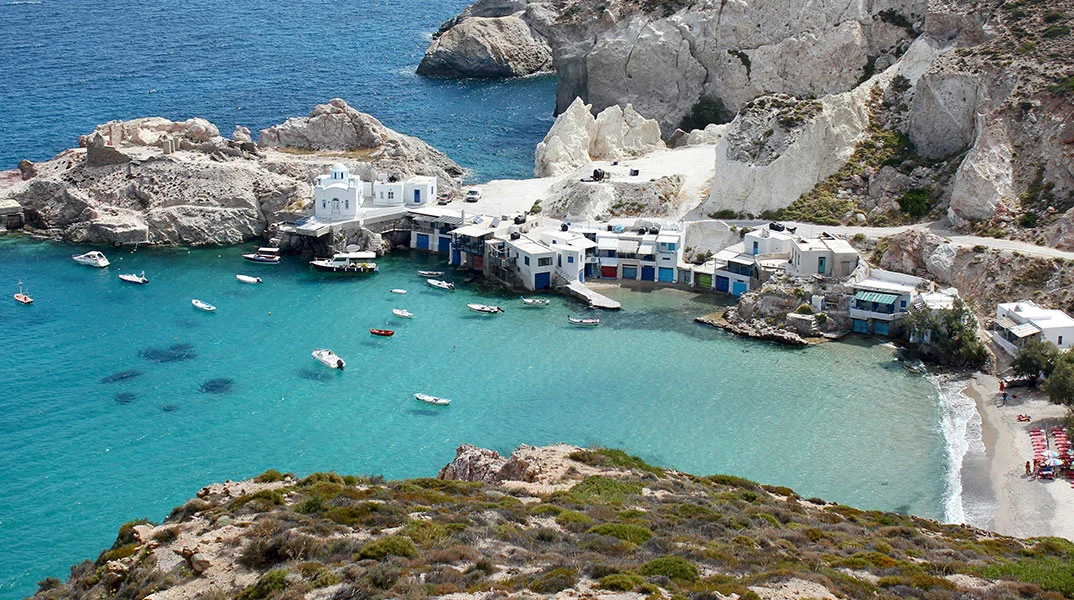
Milos is one of the most distinctive islands in the Cyclades. Its volcanic landscape, dramatic rock formations, colorful fishing villages, and remarkable coastline create scenery unlike anywhere else in Greece.
Each day on the island can feel completely different. You can swim between white volcanic cliffs in the morning, explore sea caves by boat, walk through the narrow streets of Plaka in the afternoon, and watch the sun set over the Aegean in the evening.
This comprehensive Milos travel guide includes the best beaches, key attractions, traditional villages, activities, and practical information to help you plan your trip in 2026.
Why Visit Milos?
Milos is an excellent destination for couples, families, groups of friends, and travelers who want to combine relaxation with exploration.
The island is best known for its extraordinary variety. It has more than 70 beaches, traditional fishing settlements, archaeological sites, volcanic landscapes, and remote coastal areas that can only be reached by boat.
Although Milos has become increasingly popular, it is still possible to discover quiet beaches, traditional villages, and authentic corners of the island, especially outside the busiest hours of the day.
The Most Important Attractions in Milos
Plaka and the Castle
Plaka is the capital of Milos and one of the most beautiful traditional villages in the Cyclades. Its whitewashed houses, narrow alleys, small churches, and panoramic viewpoints make it ideal for an afternoon or evening walk.
One of the highlights is the climb to the Castle of Plaka. From the top, you can enjoy impressive views over the Gulf of Milos, the island of Antimilos, and the open Aegean Sea.
The area is particularly beautiful at sunset. During July and August, it is advisable to arrive early, as the viewpoints can become crowded.
The Ancient Theatre and the Catacombs
Near the village of Trypiti are two of the island’s most important historical sites.
The Ancient Theatre of Milos was built in a privileged position overlooking the sea and the entrance to the Gulf of Milos. Its location and surrounding landscape make it one of the island’s most atmospheric archaeological sites.
A short distance away are the Catacombs of Milos, an important early Christian monument and one of the most significant sites of its kind in Greece.
The wider area is also associated with the discovery of the famous Venus de Milo statue.
The Mining Museum of Milos
The history of Milos is closely connected to minerals and mining activity. The Mining Museum, located in Adamas, explains how the island’s volcanic geology was formed and how its natural resources influenced local history and economic development.
It is an excellent option during the hottest hours of the day or when strong winds make visiting the beaches less comfortable.
Traditional Fishing Villages
Klima
Klima is one of the most photographed locations in Milos. It is known for its colorful traditional boat houses, called “syrmata”, which were originally used by local fishermen to store their boats during the winter.
The settlement is built directly beside the sea and is especially beautiful in the late afternoon, when the sunlight reflects on the colorful doors and calm waters.
Mandrakia
Mandrakia is a small fishing village with whitewashed houses, colorful boat garages and a peaceful natural harbor.
It is an ideal stop for a short walk, photography, and views of the northern coastline. It can also be combined with nearby beaches and coastal viewpoints.
Fyropotamos
Fyropotamos combines a traditional fishing settlement with a small beach and clear turquoise water.
The white church, colorful syrmata, and surrounding cliffs create one of the most recognizable landscapes in Milos. As the beach is relatively small, arriving early is recommended during the high season.
The Best Beaches in Milos
The beaches of Milos are remarkably diverse. Some are surrounded by white volcanic rocks, others by red, yellow or orange cliffs, while several remote beaches can only be reached by sea.
Sarakiniko
Sarakiniko is the most famous landscape in Milos. Its smooth white volcanic formations, caves, and deep blue water create scenery often compared to the moon’s surface.
For a quieter experience, visit early in the morning. Late afternoon is also an excellent time for photography, as the softer light highlights the shapes and textures of the rocks.
Extra care is required when strong northern winds are blowing, as the sea can become rough.
Firiplaka
Firiplaka is a long sandy beach surrounded by impressive multicolored volcanic cliffs.
Part of the beach is organized during the summer, while other sections remain open for visitors who prefer to bring their own equipment. Its clear water and spacious shoreline make it one of the most popular beaches in southern Milos.
Paliochori
Paliochori is known for its dramatic red, yellow, and brown cliffs. The volcanic and geothermal activity of the area can also be felt beneath the sand, which becomes very warm in certain places.
The beach is large enough for a full day by the sea and usually offers several organized sections during the summer.
Agia Kyriaki
Agia Kyriaki is a large beach with clear blue water and a mixture of sand and small pebbles.
Its relatively easy access makes it suitable for families and groups. Boat trips to different parts of the island may also depart from the wider area, depending on weather conditions and the selected itinerary.
Provatas and Agios Sostis
Provatas has soft sand and generally calm, shallow water, making it a popular choice for families with children.
Nearby Agios Sostis is smaller and quieter, offering a more relaxed atmosphere when the weather is suitable.
Achivadolimni
Achivadolimni is one of the largest sandy beaches in Milos.
Because of its size, it is often possible to find quieter sections even during busy periods. The beach offers beautiful views across the gulf towards Adamas and the villages on the northern side of the island.
Papafragas
Papafragas is a narrow sea inlet surrounded by high volcanic cliffs.
The path leading down can be steep and requires suitable footwear and caution. Even without descending to the water, the view from above is worth the visit.
Avoid attempting the descent in strong winds or on a slippery path.
Alogomandra
Alogomandra is a small beach known for the natural rock formation that creates shade over part of the shoreline.
It is a good option for a peaceful morning swim, especially on days when the northern coastline is calm.
Tsigrado
Tsigrado is one of the island’s most unusual beaches, but access from land is challenging. Visitors must descend through a narrow passage using ropes and a ladder.
The route is not suitable for young children, visitors with mobility difficulties or anyone uncomfortable with steep descents. Reaching the beach by boat is often the safer and easier alternative.
Plathiena
Plathiena is located near Plaka and is a good option for an afternoon swim.
Its western position often provides beautiful evening light and views towards the sunset.
The Sulfur Mines
The old Sulfur Mines of Milos create one of the island’s most unusual landscapes.
Abandoned industrial buildings, mineral-coloured cliffs and the remote beach combine to form a fascinating historical and geological setting.
Access by road can be difficult, and conditions may change. A suitable vehicle or an organized land tour is recommended.
Western Milos
Western Milos includes remote areas and beaches such as Triades, Agios Ioannis and Ammoudaraki.
Many roads in this part of the island are unpaved, and rental vehicles may not be insured or permitted to travel there. Access by boat or through an organized excursion is often the safest and most enjoyable option.
Kleftiko and Sykia
A boat tour to Kleftiko is one of the most important experiences in Milos.
Kleftiko is famous for its large white rock formations, sea arches, underwater caves, and exceptionally clear water. The area is primarily accessible by sea and is ideal for swimming, snorkeling, and exploring the coastline.
Many boat itineraries also include the cave of Sykia and remote beaches along the western coast.
Depending on your schedule and preferences, you can choose between:
- Full-day sailing tours
- Catamaran cruises
- Half-day boat tours
- Private cruises with a skipper
- Small-boat rental, where permitted
Routes may change depending on the wind and sea conditions. Safety always determines the final itinerary.
For available boat tours, private cruises and personalized recommendations, visit milosgreece.gr.
Activities and Experiences in Milos
Explore Milos by Boat
A boat excursion is one of the first activities you should arrange, particularly when traveling in July or August.
Popular sailing boats and catamarans can become fully booked well in advance. Both shared and private options are available, with full-day and half-day itineraries.
For information, availability, and assistance in selecting the most suitable route, visit milosgreece.gr.
Private and Semi-Private Island Tours
An organized land tour is a practical way to explore beaches, villages, archaeological sites and volcanic landscapes without worrying about navigation, parking or difficult roads.
Tours can be adapted for couples, families, small groups, or cruise passengers with limited time on the island.
Private and semi-private tours can be arranged through milosgreece.gr.
Hiking and Outdoor Exploration
Milos offers walking routes through archaeological areas, traditional settlements, abandoned mines, and coastal landscapes.
During the summer, hiking should be planned early in the morning. Always carry enough water, sun protection, and suitable footwear.
Avoid exposed routes during extreme heat or strong winds.
Visit Kimolos
Travelers staying in Milos for five days or longer may consider a day trip to the neighboring island of Kimolos.
The ferry connection usually operates between Pollonia in Milos and Psathi in Kimolos. Once there, visitors can explore Chorio, swim at peaceful beaches, and experience a quieter side of the Cyclades.
Schedules may change according to the season and weather, so departure times should always be confirmed in advance.
For help organizing the trip or arranging transfers to Pollonia, visit milosgreece.gr.
How Many Days Do You Need in Milos?
Three Days
Three days allow enough time to visit Sarakiniko, Plaka, Klima, and one or two southern beaches, as well as join a boat trip to Kleftiko.
The schedule will be relatively full, so careful planning is necessary.
Five Days
Five days provide a better balance between sightseeing and relaxation.
You will have time to explore additional beaches, visit archaeological sites, enjoy the traditional villages, and dedicate a full day to a boat tour.
Seven Days
One week is ideal for experiencing Milos at a more relaxed pace.
You can explore several parts of the island, join both sea and land excursions, visit remote beaches, and possibly include a day trip to Kimolos.
Getting Around Milos
Rental Car
A rental car is usually the most practical way to explore the island independently.
Demand is particularly high during July and August, so booking in advance is strongly recommended.
Before driving on unpaved roads, always check whether they are permitted by the rental agreement and covered by the insurance policy.
ATV or Buggy
ATVs and buggies are popular in Milos but should be driven carefully, particularly on roads with loose gravel, sand or heavy traffic.
Before renting, verify the license requirements, insurance coverage, and any restrictions concerning specific parts of the island.
Car, ATV, and buggy rental options can be requested through milosgreece.gr.
Public Bus
The local bus network connects Adamas with important villages and popular areas, including Plaka, Trypiti, Pollonia, and selected beaches.
Routes and frequency change throughout the season. Buses are useful for basic journeys, but they offer less flexibility for visitors who wish to explore remote areas or several beaches in one day.
Private Transfers
Private transfers are particularly useful for:
- Arrivals from the port or airport
- Early-morning or late-night journeys
- Accommodation outside the main settlements
- Transportation to boat departure points
- Transfers for private tours and activities
- Travellers without a rental vehicle
Advance booking is advisable during the high season.
Transfers throughout Milos can be arranged through milosgreece.gr.
Where to Stay in Milos
Adamas
Adamas is the most practical base for a first visit.
It is close to the port and offers convenient access to bus routes, rental services, boat departures, shops and several main roads leading to different parts of the island.
Pollonia
Pollonia is suitable for couples, families, and travelers looking for a quieter seaside environment.
It is also the main departure point for the short ferry journey to Kimolos.
Plaka and Trypiti
Plaka and Trypiti offer a more traditional Cycladic atmosphere, beautiful views, and convenient access to several archaeological attractions.
Parking can be limited during summer evenings, especially around Plaka.
Southern Milos
Areas near Provatas, Paliochori, and Agia Kyriaki are suitable for visitors seeking a quieter stay close to the sea.
A rental vehicle is usually necessary, as these locations are farther from the main villages and public transport services may be limited.
Useful Tips for Visiting Milos in 2026
- Reserve your accommodation, rental vehicle, and boat tour early, especially for July and August.
- Check the direction and strength of the wind before choosing a beach.
- Visit Sarakiniko and other popular locations early in the morning.
- Do not attempt difficult dirt roads with an unsuitable vehicle.
- Confirm whether your rental insurance covers unpaved roads.
- Carry water, a hat, and sun protection throughout the day.
- Wear suitable footwear at rocky beaches and archaeological locations.
- Confirm museum, archaeological site, and ferry schedules before traveling.
- Allow extra time for summer traffic, narrow roads, and limited parking.
- Avoid planning too many distant locations on the same day.
- Follow local instructions and weather advice for boat tours and outdoor activities.
Plan Your Milos Experience
Good planning is especially important during the busiest months of the season.
Through milosgreece.gr, visitors can receive assistance with:
- Private and shared boat tours
- Private and semi-private land tours
- Port and airport transfers
- Car, ATV, and buggy rentals
- Day trips and local activities
- Personalized island itineraries
- Recommendations based on the weather and wind
- Practical information before and during their stay
Planning according to the weather, available time, and each traveler’s interests makes it easier to experience the best of Milos without unnecessary stress.
Discover Milos at Your Own Pace
Milos is much more than Sarakiniko and Kleftiko.
It is the quiet morning swims, the colorful doors of the fishing villages, the volcanic landscapes, the traditional paths, and the changing colors of the Aegean throughout the day.
Leave some flexibility in your schedule. Follow the weather, explore the island from both land and sea, and allow time for unexpected stops along the way.
In Milos, some of the most memorable moments are often the ones that were never planned.


Comment (0)